
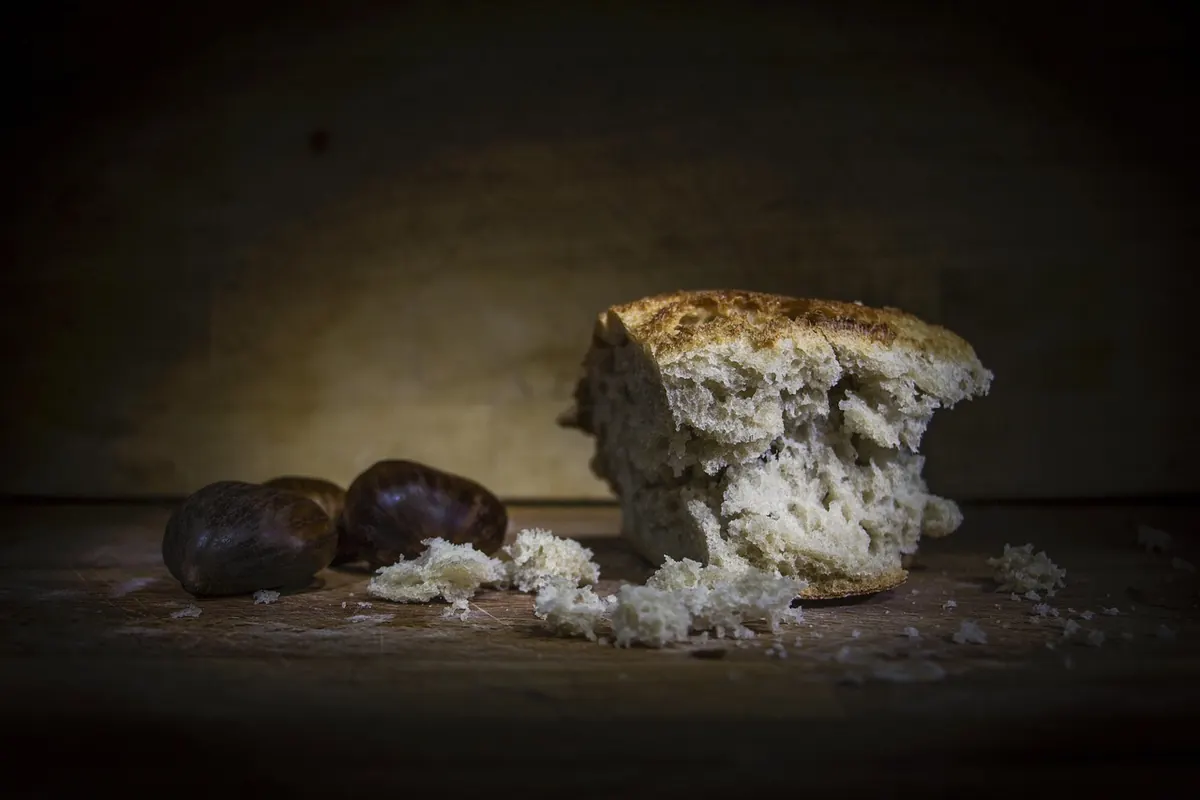
Autumn baking has its own logic. The fruit softens, the light thins out, and the oven becomes the warmest corner of the house again. In the bakery, this is the week the chestnut flour comes down from the top shelf.
This cake is what we make with it: a single-layer olive oil cake with a dark, damp crumb, a whisper of rosemary and enough orange zest to keep it from tasting like a forest floor. One bowl, a whisk, about an hour — most of which is the oven working while you do something else.
It isn't a showpiece. It's the cake you cut on a Tuesday afternoon and eat standing at the counter, and it happens to be better on the second day.
Why Chestnut Flour Deserves a Place in Your Autumn Kitchen
Chestnut flour is milled from dried chestnuts, and the flavour is specific: roasted, faintly sweet, a little smoky, with a finish that reminds people of toasted hazelnut skins. Nothing else in the flour drawer tastes quite like it. It also carries a sense of place — Tuscany, the Apennines, the mountain larders where farina di castagne has always been everyday food rather than a novelty.
It also behaves differently from wheat. There is no gluten in it, so it cannot build a crumb on its own; used alone, a cake turns heavy and, at the centre, unpleasantly gummy. It drinks liquid faster than wheat flour, it clumps in the bag the way cocoa does, and it is perishable. Fresh, it smells sweet and nutty. As it ages, the oils turn and the flavour goes from toasted to bitter — which is why some people decide they dislike chestnut flour after baking with a bag that has sat in a cupboard since last winter.
The two-to-one ratio
We use two parts chestnut flour to one part tipo 0 or plain flour. The wheat brings structure and lift; the chestnut brings flavour, colour and moisture. Keep that ratio and the cake holds together while staying soft for days. If you need it gluten-free, swap the wheat for a good gluten-free blend with a binder already in it and expect a slightly denser slice.
Buy fresh, store cold
Buy a bag you know is recent — chestnut flour is a seasonal product and the good stuff sells out by December. At home, keep it in an airtight container in the freezer and bring it to room temperature before baking. Sift it, always, and twice if it has been sitting. Those hard little lumps do not dissolve in the batter; they turn into dry pockets in the crumb.
On the olive oil
Use a fresh, medium-intensity extra virgin olive oil — something you would happily dress bread with. Save the fiercely peppery, cloudy first-press oil for beans and ribollita. This cake is only lightly sweet, so a very bitter oil reads as bitterness rather than character.
The Recipe: Chestnut Flour and Olive Oil Cake
Makes one 22 cm round cake, serving 8 to 10. Use a deep tin — the batter is generous.
- 200 g chestnut flour
- 100 g tipo 0 or plain flour
- 1½ tsp baking powder
- ½ tsp fine sea salt
- 3 large eggs, at room temperature
- 140 g caster sugar
- 120 ml mild extra virgin olive oil
- 180 ml whole milk
- Finely grated zest of 1 unwaxed orange
- 1 tsp rosemary needles, chopped very fine
- 80 g walnuts, toasted and roughly chopped
- 60 g raisins, soaked in warm water or Vin Santo for 15 minutes and drained
You will also need a 22 cm springform or deep cake tin, baking parchment, and a balloon whisk. No stand mixer required — overworking the batter is the more common mistake here.
Method
- Heat the oven to 170°C fan or 180°C static. Line the base of the tin with parchment and brush the sides lightly with olive oil.
- Sift the chestnut flour, plain flour, baking powder and salt together into a bowl. Sift twice if the chestnut flour is at all lumpy.
- In a larger bowl, whisk the eggs and sugar for about three minutes, until pale, thickened and falling from the whisk in a slow ribbon.
- Pour the olive oil in a thin stream while whisking, then add the milk the same way. Stir in the orange zest and rosemary.
- Fold in the dry ingredients in two additions, using a spatula and a light hand. Stop as soon as you can no longer see dry flour — a few small streaks are better than a smooth, over-mixed batter.
- Fold through the walnuts and drained raisins, then scrape into the tin and level the top.
- Bake for 45 to 50 minutes. Start checking at 40. The cake is ready when the top is deep brown and springs back slowly, and a skewer in the centre comes out with a few damp crumbs clinging to it.
- Cool in the tin for 15 minutes, then turn out onto a rack and leave until barely warm before cutting.
What the batter should look like
Wetter than a wheat-flour cake batter and closer to thick pancake mix. If it stands up in a spoon, add milk a tablespoon at a time. If it pours like cream, you have gone slightly too far — fold in a spoonful of plain flour, and note it for next time.
Knowing when it is done
Resist the clean-skewer test. A chestnut flour cake that reads "clean" is usually already dry, because the flour keeps absorbing moisture as it cools. Take it out while the centre still looks a shade underdone and let the residual heat finish the job.
Cut it warm and you will get a gummy middle. Chestnut flour needs the full cooling time — the crumb sets as it comes down to room temperature.
Variations Worth Trying
- Pear and rosemary: dice two firm ripe pears, toss them in a spoonful of plain flour and fold them in with the walnuts. Increase the baking time by 5 minutes.
- Ricotta: replace 100 ml of the milk with 150 g well-drained ricotta, whisked smooth with the eggs. The cake becomes lighter and slightly tangier.
- Chocolate: add 60 g dark chocolate chopped into rough shards and drop the rosemary. Skip the raisins if you want it cleaner.
- Chestnut honey: use 100 g chestnut honey in place of the sugar and reduce the milk by 20 ml. The honey flavour is dark and slightly bitter, in a good way.
- All chestnut: if you want to bake it entirely gluten-free, use 300 g chestnut flour plus a gluten-free blend containing a binder, and add an extra egg yolk for structure.
Serving, Storing and Second-Day Cake
Serve it plain with coffee, or with a spoonful of ricotta beaten with a little honey and orange zest. A small glass of Vin Santo or a light dessert wine suits it far better than anything cold and sweet. It is also excellent at breakfast, and even better sliced and grilled the day after — a minute in a hot pan with a brush of olive oil brings the edges back.
Kept wrapped in parchment in a tin, it holds for three days; after that, refresh a slice in a 150°C oven for eight minutes. It freezes well, sliced and interleaved with parchment, for up to two months. Thaw at room temperature rather than in a microwave, which turns the crumb rubbery.
A last note on ingredients: chestnuts are tree nuts, so this is not a cake for a nut-free kitchen, and the walnuts can be left out but not quietly swapped for something else. If you are baking for someone with allergies or dietary restrictions, check with them before you start rather than after.
Bake it once as written. Then adjust: more rosemary, less sugar, a different oil, a handful of dried figs. The recipe is sturdy enough to take it, and chestnut season is short.
Photo: Coffee-king / Pixabay
Related posts
More stories you’ll love reading